Showing posts with label Malawi. Show all posts

Sunday, 6 July 2014

50 Things I Love about Malawi

Fifty years ago today, Malawi gained independence from Britain.  Fifty years! That's something to celebrate. So here are fifty things I love about Malawi.
  1. Scenery--mountains, lakes, plateaus, valleys, Malawi has it all, and it's beautiful
  2. Greenery--with a rainy season from November to April, the country is usually bursting with green
  3. Baobabs
  4. Blue gum trees--they grow fast and tall, harvested just 7 years after planting.
  5. Mt. Mulanje--3000 metres (10,000 feet).  It's a Miller favorite pastime to climb Mulanje over a weekend. Just isolated enough so you can feel alone and sometimes get a cabin to yourself, but civilized enough to have discernible paths and rustic cabins.
  6. Lake Malawi--I didn't always appreciate it because we lived so close, it's the number one tourist destination and home to the delicious chambo fish.
  7. Friendliness of the people--there's a reason Malawi is nicknamed "The Warm Heart of Africa"
  8. Bike taxis. If the town is flat enough, just hop on the rack over a bike's rear wheel, and your taxi rider will maneuver through the sand and around potholes to get you safely, quickly, and cheaply to your destination.
  9. Roadside chip stands--where you can pick up a bag of delicious greasy chips with chip-oil-drizzled cabbage on the side and fried chicken pieces, too (even the chicken head if you want!)
  10. Nsima--the thick, tasteless, porridge-like-but-solid mass that is a staple food to Malawians. Best eaten with salty Chinese cabbage and beef stew.
  11. Malawian tea and the beautiful tea estates its grown on. Of course, it should be served in enormous yellow tin mugs with several tablespoons of Illovo sugar and milk.
  12. Avocadoes cut in long, banana-length slices with salt on top.
  13. Fresh milk straight from the farm--it came with bits of grass still floating around on the top, and we had to pasteurise it, but it was cheaper than the cheapest bag milk, whose freshness was always questionable
  14. Long-life milk--which was also great, because you could buy a couple litres of milk at a time in the city and always have it on hand
  15. Perfect climate--cool/cold winters and reasonably warm/hot summers
  16. Sugarcane--yummy.
  17. Monitor lizards--and that distinctive rustle of dirt and leaves that tells you there's one in the garden
  18. Hippos and hippo snorts--which we could hear because we lived along the Shire River
  19. Elephants--African elephants, with their huge ears.
  20. English signs--how could you resist the "Everybody Complains Hardware Shop"?
  21. Watching tourists--and guessing where they come from. Our favorites were probably the Afrikaans men in their short shorts, safari shirts, and socks with sandals.
  22. Vegetable markets--where you were never really sure if you were being ripped off and where you were thoroughly ashamed you never learned more Yawo or Chewa.
  23. Chitenje shops--walls of colorful 2-metre-long material to wrap around a woman's waist on top of a skirt or dress.
  24. The Nation and The Daily Times and their long-worded, flowery writing.
  25. The Flames, Malawi's national football team. We once tied Cote D'voire.
  26. Eating fresh guavas with the yellow skin.
  27. Traffic police--the highways have many police checks, sometimes every 20 miles or so. Chatty or serious, it was usually a pleasure. Except when they fined you for going 52 in a 50 kpm zone, or when they stopped me in town after I stalled to make sure I had a license and ask "What's wrong with you?"
  28. The flag, and the fact everyone hated when Bingu changed it on a whim, and how Joyce almost immediately reversed it to the original after Bingu died. Now that Peter, Bingu's brother, is in, we'll have to see if he'll leave it.
  29. Peace.  I'm so proud that Malawi has never had a war; it just goes against the culture.  Instead, Malawi has received immigrants and refugees from Mozambique, Zimbabwe, and Rwanda, Congo, etc., escaping their countries' conflicts.
  30. Free 30-day visitor visas--when you have to pay $100 to enter Zambia, and $75 for Zimbabwe and Mozambique, Malawi seems so welcoming
  31. The Independence Arch on the highway leading into Blantyre.
  32. Carlsberg advertisments, "Probably the Best Beer in the World." Such a classic.
  33. British colonial influence on English, which has mixed me up so that I use half metric, half English and mix British and American spellings
  34. SOBO squash, watered down until it's orange-flavored water
  35. SOBO ginger ale--even though they stopped making it years ago, it's a consolation that Malawi once had the world's best ginger ale
  36. The small size of the country.
  37. Joyce Banda--regardless of her politics, she was the second female president in Africa. That's just too cool.
  38. Third-world problems, like poor electricity and water or having no fuel in town for weeks. (I realise that it's terrible for the economy, but I do appreciate that I learned to live with it.) It makes life more interesting and exotic, especially if it's not your responsibility to keep the car topped up. And then it's cool when your dad is already friends with the petrol station attendants, who sometimes send texts to alert him when a tanker is coming to town.
  39. Being in the racial minority. Maybe it's wrong, but I grew up where being different was the norm, where my skin was a statement of my history, and it was strange to finally look like a native when I moved back to the US.
  40. Expats and the instant bond we form. Whether they're from Chile, Nigeria, Japan, Australia, or the Netherlands, we're all in the same boat as foreigners.
  41. Minibuses--your comparatively cheap, exciting, and quick transport option. 
  42. Astor peanut butter, never tasted its equal
  43. British colonial architecture
  44. Blantyre--my best friends, the hills, the smog, the Mudi river, the market, city centre, everything.
  45. Mangochi--Mom and Dad, the home church we were involved in, the several Muslim calls to prayer we could hear from our house (nobody could sing it like our favorite meuzzin), the shaded main street, the bicycles crowding out the cars, etc., etc.
  46. The new bridge over the Shire River and the old clock tower at its base, along with memories of the old single-lane bridge, where you'd have to back-up if you reached the middle of the bridge and found another car coming towards you.
  47. Concrete floors--nothing quite like solid floors and brick houses after creaking around in American houses that feel like they're made of plastic.
  48. Freedom, where politics aren't violent and people generally have freedom of speech and religion.
  49. The mix of Chewa and English people use, which can only happen when a fair portion of the population is bilingual. Most Americans wouldn't have another language to mix English with and most Sudanese weren't comfortable enough with English to mix it with Arabic.
  50. The people, of course.  Our neighbor who admonished me to drive defensively and sent me tea when I was in Sudan.  The vegetable-man who brought vegetables each week because Mom can't get to the market.  The driving instructors at my driving school.  Our gardener of nearly 13 years and nightwatchman of nearly 11 years.  And many many others.
Lake Malawi
Tea estates below Mt Mulanje
Mangochi, as seen from a nearby hill. You can see the Japanese bridge on the left.

Wednesday, 30 April 2014

Malawi Elections

Hey, let's talk Malawi presidential elections, which are only 3 weeks away!

Peter wa Mutharika
There are four major contenders, including Joyce Banda, the incumbent, for PP (People's Party). MCP (Malawi Congress Party), which is the party that ruled Malawi from independence in 1964 until the first multiparty elections in 1994, is represented by Dr Chakwera. UDF (United Democratic Front) is represented by Atupele Muluzi, son of former president Bakili Muluzi (1994-2004). And DPP (Democratic Progressive Party) is represented by Peter wa Mutharika, brother of the late president Bingu, who died of a heart attack while in office.
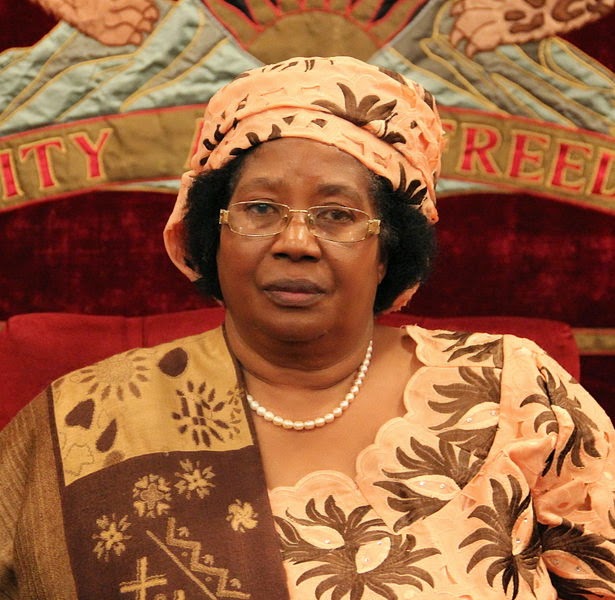
President Joyce Banda.
(Lindsay Mgbor,
Dept. International Development)

It's an interesting election. Normally I'd expect the incumbent to win, but this time the incumbent is a woman who succeeded to office through Bingu's death, not election. I'm interested to see if Malawi has confidence in a female president. Afterall, Joyce Banda is only the second female president in the entire continent.

Also, this is the first election with televised debates. How cool is that! I only wish I could find them online. In any case, President Banda decided she was "too busy" with her campaign schedule to participate.

They say our last elections (2009) were the second most peaceful in Africa. I don't actually know where I heard that, but it seems plausible. I was there at the time, and election day passed just like any other day. Either way, you can join Malawi today in a day of prayer for peaceful elections, led by several Muslim organisations and Protestant churches.

Thursday, 14 March 2013

How the President Died

Well, it's time to focus on the news back home today, 'back home' referring to Malawi this time.  Last week, news outlets in Malawi released an investigative commission's full report on former President Bingu wa Mutharika's death on April 5 last year.

I took a look at part of it today--starting in chapter 2 "Evidence Taken Regarding the Death of the President." It was actually a lot more readable than I had anticipated, but I only read up to the part where he was first declared him dead, which I will include here for your interest:
Mrs. Stella Warren testified to the Commission that at the time she went into the ambulance where the President was, she noticed that "the President was dead". Dr. Isyu Mwakasungula also testified that at the time that they were carrying the President onto the trolley, he was motionless and there was no response of any sort from him. His eyes were closed. In Dr. Mwakasungula's opinion it gave the impression that the President was critically ill or unconscious or was dead.
But because you probably don't want to read the entire report, I will give a summary of the section I read and some highlights.  Summary: the President was meeting an MP when suddenly he had a heart attack; he was soon put in an ambulance and driven to the hospital, but he apparently died on the way.

In the course of events, there were several unfortunate things noted in the report which prevented the President from getting the best care:
  • The President's doctor, when called upon the President's collapse, did not have the President's emergency aid kit with him.  It was at his house.
  • An ambulance was not ready immediately.  The unconscious President was carried onto the elevator at the State House and waited there for a car to be found.
  • The President's doctor was not able to secure his airway because he was too weak to lift him: 
  • The Commission was informed that about November 2011, Dr. Namarika was involved in a road accident on his way to Ndata Farm House, the President’s private residence in Thyolo. Following the accident, Dr. Namarika suffered a dislocation of his left arm and was undergoing physiotherapy at the time of the President’s collapse. Dr. Namarika told the Commission that he could not effectively use his left arm because it had very limited movement. The Commission established that the doctor could not successfully secure the airway at the time of the President’s collapse because for him to do that he had to intubate the President. He could not intubate the President because for him to do that, he had to elevate the President to get the path to the neck. The doctor could not manage to do that because of the limitation that he had in the use of his arm and that, in his own words, “the President was so big.”
President Bingu wa Mutharika with the Obamas
  • While in the ambulance, someone tried to call Kamuzu Central Hospital to alert them that the President was coming, but none of their numbers worked.  Out of ten "switchboard numbers," only two were working, but the calls did not go through.
  • When the ambulance arrived at the hospital, it appeared that the President was dead, so, though disatisfactory, it was inconsequential that some emergency drugs were not available in the ICU and ICU staff had to be dispatched to go find them, whether in or outside the hospital.
It was here that I stopped reading and started blogging, later cooking a bowl of grits (humbles me to admit that) and settling down to enjoy it while finishing up this post.  In going back over the report to write this, I read further that the President's physician insisted the medical staff continue CPR for an hour, despite the President's apparent death and the staff's complaints of being tired.  With such extensive CPR, the President's ribs were broken.

The report also contains chapters on how the President was subsequently flown to South Africa (at the time, those of us who had heard that the President may have died were told he was in critical condition and seeking further treatment in South Africa), the brief power struggle between the President's political party (DPP) and that of the then Vice President Joyce Banda (PP) over the constitutionality of the Vice President succeeding when she and the President had been at odds and she had recently left his party and created her own, and the infamous prophecy of a Nigerian cleric that an African president would die.

Scrolling past those sure-to-be-fascinating topics, I sampled a few of the most recent comments posted on Nyasa Times. One commentater, "Mlomwe Original," had a personal message in capital letters for many of the principal characters:
  • President's physician: "How could he keep the first aid kit of the president at his residence....STUPID DOCTOR."
  • ICU staff: "I understand from the report that they...even fractured the some ribs of the patient,...I can assume that most patient in ICU do not come have been dying the same way because you end up breaking their ribs thereby aggravating their condition....YOU SHOULD ALSO BE CAUTIONED OR BE SENT TO REFRESHER COURSE."
  • MP present during heart attack: "from the report I don't see you at KCH [hospital], are u a real Malawian Mother, YOU ARE NOT FIT TO BE AN MP."
  • "Midnight Five" (presumably those who met secretly to try to keep the then Vice President from succeeding): I WILL NEVER NEVER EVER FORGIVE YOU AND I EVEN HATE TO HEAR YOUR NAMES>WHY ARE YOU STILL WALKING FREE....STUPID.
  • Cabinet (on division over succession): "do you know what you could have caused to the Malawi nation????? By now we could could have have in civil war. Two camps could have emerged, one for your camp and one for the then VP Mrs Banda, and this could have escalated to something grave.....as long as I live YOU WILL NEVER SEE MY VOTE....FROM NOW ON i WILL DECAMPAIGN YOU USING ANY MEANS I WILL USE."
A commentater called "Chris" bemoaned the lack of patriotism in the President's care:
why was there no deputy doctor? The on call doctor had a bad arm. Are we serious? He was not treated as a president and that pains me. No matter who is in office, no matter the party affilation; let us serve our presidents with all our heart. If this was a more patriotic country (e.g the USA) that doctor would have found the strength to use his other arm and perform CPR and intebate the President. Im so sad! They did not have a gurney to move the president to the ambulance? Seriously! They were carrying him. How sad is that. That alone could have worsened his state. Im so sad. Malwi needs a revival. We need to stop only thinking about ourselves. I really can’t believe it.
One commentator, "4kwacha," complained about the typos and the President's weight: "Too many typos in this report, is this the quality of government documents?.... the so called medical personnel  should encourage the president to eat healthy diets and exercise (Bingu was also obese as stated in the report)."

Another commentater, "Clement Njunga," said exactly what you are probably thinking after reading this long blog post: "It has taken me 5days to complete reading the whole report. I am buffled and tung tied!"

Friday, 6 July 2012

Mulungu Dalitsa Malawi, Warm Heart of Africa!

Happy Independence Day!  And I'm not two days late because I'm referring to Malawi, which is 48 years old today!

On July 6, 1964, Malawi went from being a colony of Great Britian to a fully-independent member of the Commonwealth without so much as a single shot fired.  In fact, the government was basically being run by a Malawian for several years before.

But let me back up.  Malawi's people are mostly made up of about a dozen tribes.  The major tribes, Chewa, Ngoni, Yawo, and Lomwe are all immigrants (isn't the whole world?).  The Chewa come from Congo, the Ngoni from South Africa, the Yawo from Mozambique (either that or they are related to the Zulu from South Africa), and the Lomwe from Mozambique.  Back in the day, Malawians traded with the Portuguese and Arabs.  They first met the British through David Livingstone, after whose birthplace, our "commercial capital," Blantyre, is named.

In the late 1800s, the British claimed Malawi as theirs and called it British Central Africa.
                                         
They later changed it to Nyasaland, adopting the Yawo word for lake.  In case you didn't know, Malawi is home to the third largest lake in Africa, which is probably what we're best known for, after being the birthplace of Madonna's kids, and the country that jailed homosexuals.  Maybe soon we'll become famous for our female president?


Nyasaland flag of Malawi during colonial days
Back to history, there was this Malawian who'd been educated in the US who decided to return to Malawi in 1958, calling for independence.  He was kind of popular, so the British put him in jail in Zimbabwe for a year.  But when they released him, they engaged him in talks, and before you knew it, he was the prime minister and the de facto leader of the country.  When the British agreed to make Malawi fully independent, he was voted in as the president.
with independence, we adopted the 'rising sun' flag
So who was this guy?  His Excellency the Life President Ngwazi Dr. H. Kamuzu Banda as he came to be called.  Our first Malawian president was in power for 30 years, from 1964-1994.  The Banda years intrigue me.  He was somewhat authoritarian and conservative.  News, movies, and books were censored, TV was banned, men and women had to observe dress codes (short hair for men, skirts for women) when entering the country, etc.  And just like the US forcibly moved Native Americans west in the 1830s, Banda made all Indians leave their homes and businesses in small towns and move to designated cities.  It was a time of order and oppression.  At least that's what I've gathered.

In 1993, there was a referendum about allowing multi-party elections, and Malawians voted for choice.  Consequently, HETLPNDHKB (that is to say, President Banda) lost the election in 1994 to Bakili Muluzi.  The new constitution limited presidents to two (5 year) terms, so Bakili Muluzi, though he talked of a third term, was out after 10 years.  My family moved to Malawi in these years.  I'll remember him for saying he was the best beggar in the world because he knew how to get money from donor countries.

And then Muluzi's "successor," Bingu wa Mutharika won the 2004 election.
Bingu (an edited picture between Michelle and Barack Obama)

Bingu created his own party less than a year after taking office.  He easily won re-election in 2009, but didn't survive his full term, dying of a sudden heart attack 3 months ago.  I'll remember him for the fuel crisis that dominated his last year and for changing the flag to this:

Bingu's 'full sun' flag, supposedly denoting that we are a fully-developed country
Which leads me to Joyce Banda (or JB, for short), his vice prez, who became president on his death.  Being the first female president in Southern Africa, she's made waves, also because she immediately reversed a lot of the late Bingu's decisions, including changing the flag back to the rising sun image.


So what's Malawi like?  Our population is about 15 million (2 million more than Zambia, 68% of Australia's population, 23% of France's population).  So we have a lot of people, which I like to think is because Malawi is so peaceful that it attracted people coming from wars (Mozambique Civil War) or hotspots like Zimbabwe.  Our 2009 elections were called the second most peaceful in Africa; I can't remember who said that, but I remember hearing it distinctly.

Malawians are really friendly people, so much so that Malawi is nicknamed the "Warm Heart of Africa."  And Malawi is a free country.  Freedom is relative, of course, but living in a country with less freedom makes me appreciate so much more the freedom I enjoyed in Malawi.

Most importantly, of course, Malawi is home.  At least, I think it is.  God bless Malawi!  Mulungu dalitsa Malawi!
Zomba, I think
Blantyre-Zomba road, I think
most Malawians cook over wood-fires
Mangochi district
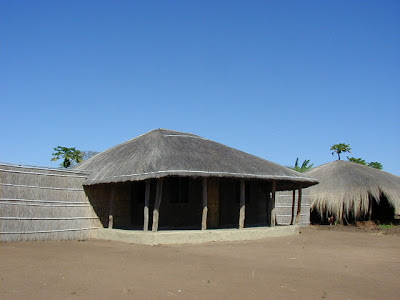
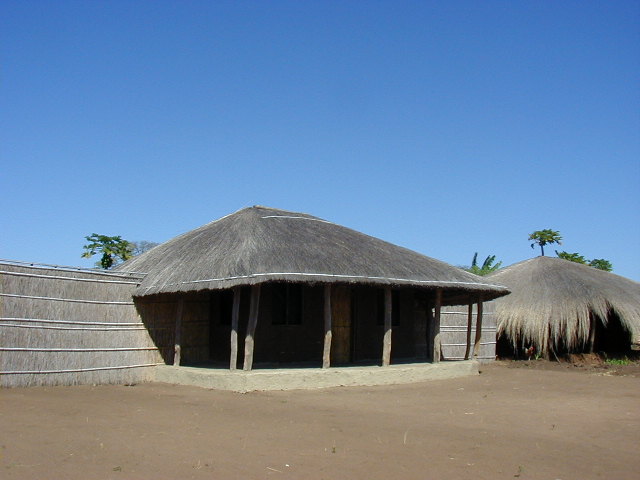
traditional hut
Lake Malawi